
Sedentary Activities: How to Sit Less and Move Better
Sedentary activities are part of modern life. Working at a desk, driving, watching shows, scrolling on a phone, gaming, reading, and sitting through long meetings can all add up. Sitting is not automatically harmful, and rest has a real purpose. The concern is spending long, uninterrupted stretches with very little movement.
A healthier routine does not require replacing every seated activity with intense exercise. I recommend starting with a simpler goal: notice where sitting clusters in your day, then create realistic opportunities to stand, walk, stretch, and change position.
Table Of Contents
Find Your Section
• What Sedentary Activities Really Mean
• How Prolonged Sitting Can Affect Health
• Practical Ways To Break Up Sedentary Time
Quick Navigation Note
The best changes are usually tied to routines you already have, such as work calls, meals, television breaks, school pickup, or bedtime scrolling. Small movement breaks can be easier to sustain than a plan that depends on motivation alone.
What Sedentary Activities Really Mean
Sedentary Behavior Is More Than “Not Exercising”
Sedentary behavior generally means waking activities done while sitting, reclining, or lying down that involve very low physical effort. A person can meet exercise recommendations and still spend much of the remaining day seated. That distinction matters.
For example, a person may take a brisk walk before work, then spend hours at a computer, commute by car, eat dinner at the table, and relax on the couch. The walk supports health and fitness. It does not necessarily erase the physical effects of staying in one position for most of the day.
Common sedentary activities include:
• Desk work, studying, paperwork, and online meetings
• Driving, riding public transit, or sitting during long commutes
• Watching television, streaming, gaming, and social media use
• Reading, crafting, and seated hobbies
• Sitting during meals, classes, appointments, or social events
The goal is not to label every seated hobby as bad. Reading a novel, recovering after illness, or enjoying a movie with family can be valuable. The more useful question is: How long do I stay still before I change position or move?
Why Position Changes Matter
The body is built for variation. Muscles make frequent low level adjustments when you stand, walk, reach, climb stairs, or shift weight. When movement becomes scarce, joints may feel stiff and muscles may become less prepared for ordinary tasks.
Think of a shoulder held forward over a keyboard for hours. The neck and upper back muscles must keep working to support the head, while the chest and front of the shoulders remain in a shortened position. That does not guarantee pain, but it can make soreness, tension, and fatigue more likely for some people.
The same pattern can happen in the hips, knees, ankles, and low back. A chair is not the enemy. Staying fixed in any position for too long is often the issue.
Screen Time Has Its Own Challenges
Screen time is a major source of sedentary behavior for adults and children. A screen may hold attention so well that people miss normal signals to get up, drink water, change posture, or rest their eyes.
Technology also blurs the line between work and rest. A person may finish a full day of computer work and then move directly to a phone, tablet, or television. The activity changes, but the body may still be sitting or reclining in the same limited positions.
For children, sedentary screen use can displace active play, sleep routines, family conversation, and hands on learning. For adults, it may crowd out errands on foot, exercise, meal preparation, and social activities that involve movement. The practical concern is not technology itself. It is whether screens repeatedly replace movement, sleep, and other needs.
How Prolonged Sitting Can Affect Health
The Physical Effects Can Build Quietly
Long periods of inactivity may affect circulation, muscle activity, energy use, and how stiff a person feels when they stand. These effects vary widely. One person may notice tight hips after an afternoon of meetings; another may first notice that stairs feel harder than they used to.
Over time, a sedentary lifestyle is commonly associated with health risks such as weight gain, reduced cardiovascular fitness, and poorer metabolic health. It may also make it harder to maintain strength and balance, especially when sitting replaces regular walking and other daily activity.
This is not a reason to panic after a quiet day. Health risk is shaped by many factors, including age, sleep, nutrition, medications, medical conditions, stress, exercise habits, and total daily movement. It is better to view sedentary time as one adjustable part of the picture.
Pain, Stiffness, And Ergonomics
Ergonomics can make sitting more comfortable, but it cannot make an all day static posture ideal. A well arranged workstation supports a more neutral position. Movement is still needed.
A useful workstation check includes:
| Area | Helpful Setup Goal | Common Problem To Watch For |
|---|---|---|
| Screen | Top area near eye level and directly in front of you | Looking down or turning your neck for long periods |
| Chair | Back support with feet resting securely | Perching at the edge or dangling feet |
| Keyboard and mouse | Close enough to keep shoulders relaxed | Reaching forward or shrugging repeatedly |
| Lower body | Hips and knees positioned comfortably | Staying crossed legged or compressed for hours |
Fair warning: perfect posture is not a single frozen pose. Trying to hold one “correct” posture all day can create tension. A better target is comfortable alignment plus regular movement.
If desk discomfort is already affecting your day, 5 tips to decrease pain and improve your energy levels can offer practical ideas for building healthier habits around work and daily activity.
Mood, Focus, And Mental Well Being
Sedentary time can affect more than muscles and joints. Some people notice that extended sitting and screen use leaves them mentally flat, restless, or less focused. Others may use screens to cope with stress, which can become a loop: stress leads to more passive screen time, less movement, disrupted sleep, and then lower energy the next day.
A short walk, a few minutes outside, or standing while taking a phone call will not solve every mental health concern. Still, regular movement can create a useful transition between tasks and give the mind a break from constant input.
When low mood, anxiety, sleep problems, or loss of interest in normal activities continues or becomes severe, movement should be one support among several. Professional mental health care may also be appropriate.
A movement break is not a punishment for sitting. It is a way to give your body and attention a reset.
Practical Ways To Break Up Sedentary Time
Build Movement Into Existing Habits
The most reliable plan usually has a clear cue. “Move more” is too vague when you are busy. “Stand when I answer a phone call” is easier to remember because the trigger already exists.
Try this simple workflow:
- Identify the longest seated block in your usual day.
- Choose one realistic cue within that block, such as the end of a meeting, a refill of water, or a television episode.
- Add a short movement action that fits your space and ability.
- Repeat it for several days before adding another habit.
- Adjust the plan if it causes pain, feels unsafe, or conflicts with recovery instructions.
Movement actions can be brief:
• Stand and gently shift your weight from side to side
• Walk to another room, mailbox, or water fountain
• Do a few controlled sit to stands from a sturdy chair
• March in place while waiting for coffee or food to heat
• Perform light stretches that feel comfortable, not forced
For more ideas that can fit different ability levels, explore these 5 activities to improve your health. The best choice is the one you can repeat safely, not the most demanding option.
Match The Strategy To Your Day
Different sedentary activities call for different solutions. A remote worker may benefit from calendar reminders and a headset for standing calls. A driver may need planned stops and gentle movement after arriving. A student may do better with movement between study blocks instead of trying to fidget through a lesson.

| Situation | Practical Movement Option | When To Modify Or Avoid It |
|---|---|---|
| Desk work | Stand after meetings, walk during a short break, or alternate tasks | Avoid long standing if it increases swelling, dizziness, or pain |
| Television | Move during transitions, ads, or episode changes | Keep the movement easy if you are tired or recovering |
| Long drive | Plan safe stops to walk and change position | Follow medical advice after surgery or during travel restrictions |
| Phone scrolling | Charge the phone away from the couch or bed | Use accessibility settings if standing is difficult |
| Studying | Use brief breaks for a walk, water, or gentle mobility | Do not interrupt essential concentration every few minutes if it harms learning |
The right frequency depends on your health, work demands, and tolerance. If frequent breaks are not possible during a shift, focus on what is available before work, during meals, after work, and on days off. A plan does not need to be perfect to be helpful.
Stretching Helps, But It Is Not The Whole Plan
Stretching can relieve the feeling of stiffness for many people, especially after sitting. It works best as part of a larger routine that includes walking, strength, balance, and position changes.
Use slow, comfortable motions. Avoid bouncing, forcing a joint to its end range, or treating sharp pain as a sign of progress. If a stretch creates tingling, numbness, dizziness, worsening pain, or symptoms that travel down an arm or leg, stop and seek appropriate medical guidance.
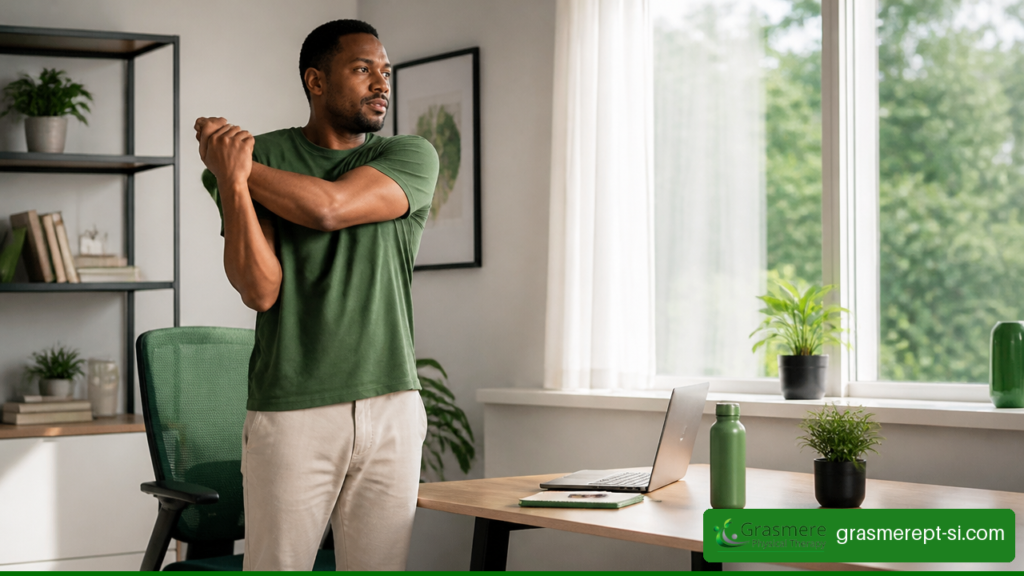
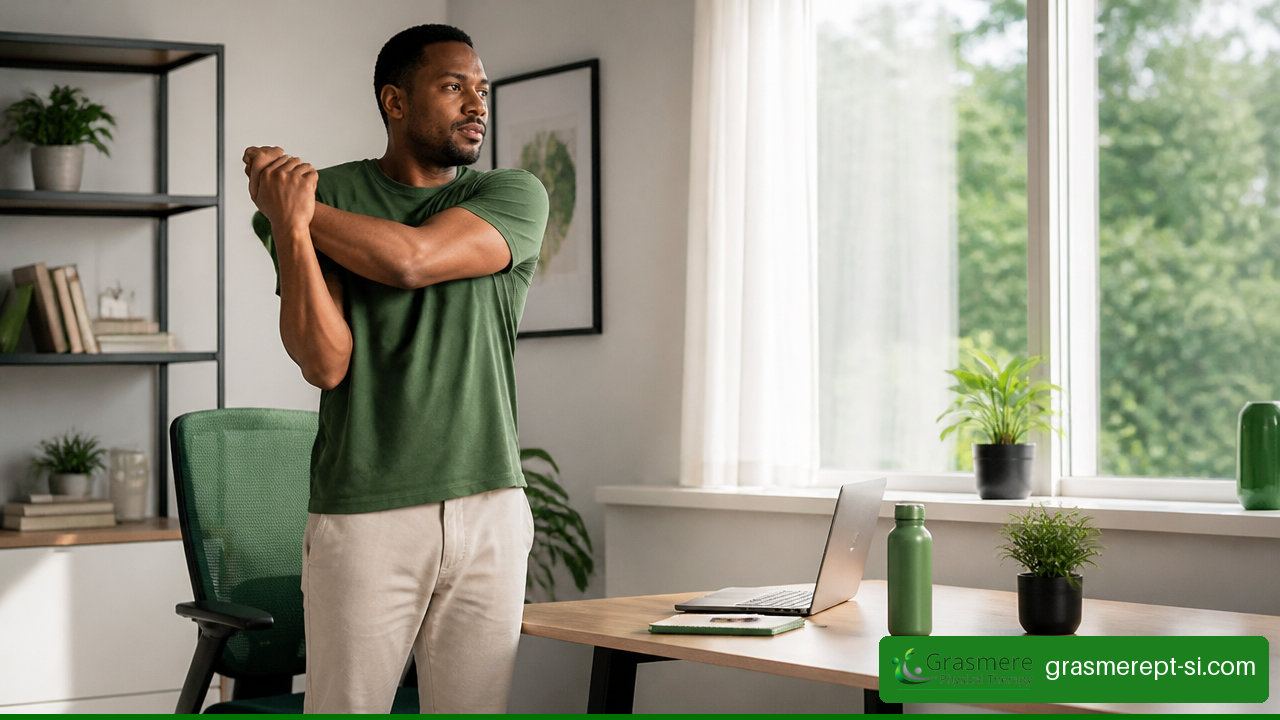
For a straightforward way to make mobility work part of your habits, Add stretching to your daily routine. Consider pairing stretching with an existing cue, such as after brushing your teeth or before opening a streaming app.
Know When A Personal Assessment Is Worthwhile
General movement advice has limits. A personalized assessment may be useful when symptoms keep returning despite routine changes, when pain affects sleep or work, or when you feel unsteady while walking.
Be especially careful if you have recently had surgery, have a neurological condition, experience frequent falls, are recovering from a serious illness, or have been told to follow specific activity restrictions. In these cases, the safest movement plan may look very different from a general fitness routine.
Key Takeaways
Focus On Interruptions, Not Perfection
You do not need to eliminate sedentary activities. Start by reducing long, uninterrupted stretches of sitting. A few intentional position changes can make a busy day feel more manageable.
• Sitting is normal; prolonged stillness is the pattern worth addressing.
• Exercise and reduced sedentary time support different parts of health.
• Ergonomics can improve comfort, but it does not replace regular movement.
• Screen habits deserve attention because they can quietly extend sitting into evenings.
Choose Actions You Can Repeat
The most effective movement plan is usually the one that fits your schedule, body, and environment.
• Attach movement to a familiar daily cue.
• Use short breaks when longer exercise sessions are not practical.
• Scale activity down during flare ups, illness, or recovery rather than stopping all movement without guidance.
• Seek individualized care when pain, weakness, balance problems, or numbness limits daily life.
Frequently Asked Questions About Sedentary Activities
What Are Examples Of Sedentary Activities?
Examples include desk work, driving, watching television, gaming, scrolling on a phone, reading, studying, and sitting during meals or meetings. The defining feature is low movement while sitting, reclining, or lying down during waking hours.
Is Sitting Bad Even If I Exercise?
Regular exercise is beneficial, but it may not fully address long, uninterrupted blocks of sitting. If you exercise and also sit for much of the day, keep the exercise routine and add brief movement or position changes between seated tasks.
How Often Should I Get Up From My Chair?
There is no single schedule that works for every person. A practical approach is to get up often enough that you do not become stiff, uncomfortable, or locked into one posture. Use natural breaks in work or entertainment, then adjust based on your symptoms and responsibilities.
Can Standing All Day Replace Sitting?
No. Standing still for long periods can also cause discomfort, fatigue, and swelling for some people. Alternating among sitting, standing, walking, and changing positions is usually more realistic and more comfortable than replacing one static posture with another.
Can Sedentary Activities Cause Back Or Neck Pain?
They can contribute to stiffness or discomfort, especially when a person stays in a cramped or poorly supported position for long periods. Pain has many possible causes, though. Persistent, severe, or spreading symptoms should not be blamed on sitting alone without an appropriate evaluation.
What Is A Good Movement Break At Work?
A good break is safe, brief, and easy to repeat. You might stand, walk to refill water, do a few gentle shoulder rolls, or take a short lap through the office. Choose an option that does not interfere with safety rules or make symptoms worse.
How Can Parents Reduce Sedentary Screen Time For Children?
Create predictable screen boundaries, offer active alternatives, and avoid relying on screens as the only way to handle boredom. Family walks, music breaks, playground time, simple chores, and active games can help. The goal is balance, not constant activity.
When Should I Seek Help For Stiffness Or Pain From Sitting?
Consider professional guidance if discomfort lasts, worsens, limits work or daily tasks, interrupts sleep, or comes with numbness, weakness, dizziness, loss of balance, or new changes in bowel or bladder control. Urgent symptoms should be evaluated promptly.